Hello Mark how are you?
Fine, thanks!
Congratulations on the release of Feathered Creatures how does it feel?
Great! We worked hard on it, and obviously are excited that it’s out in the world now. The response has been super positive!
It’s a collaboration with Purbayan Chatterjee how did that come about?
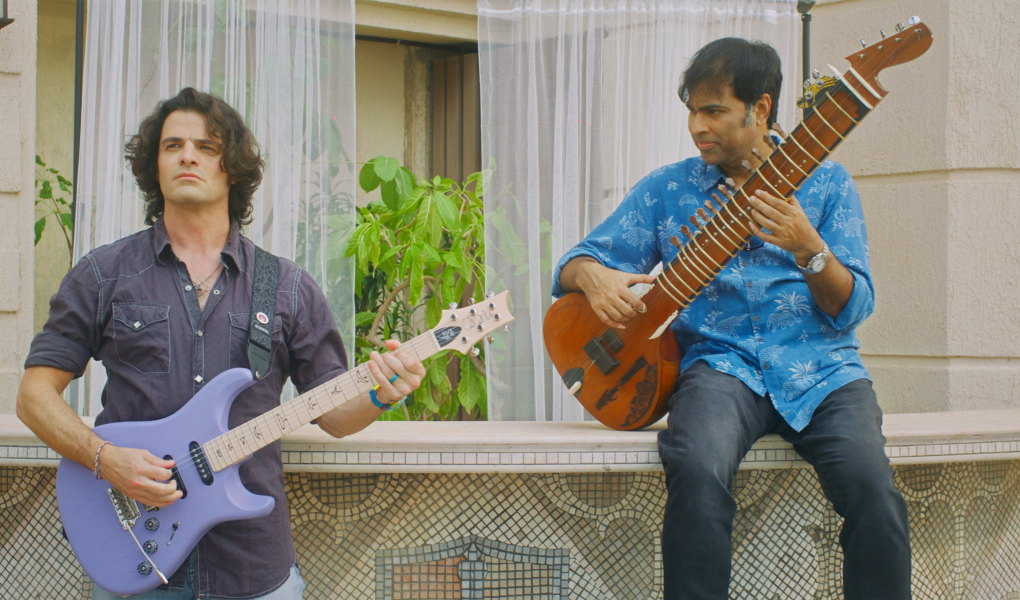
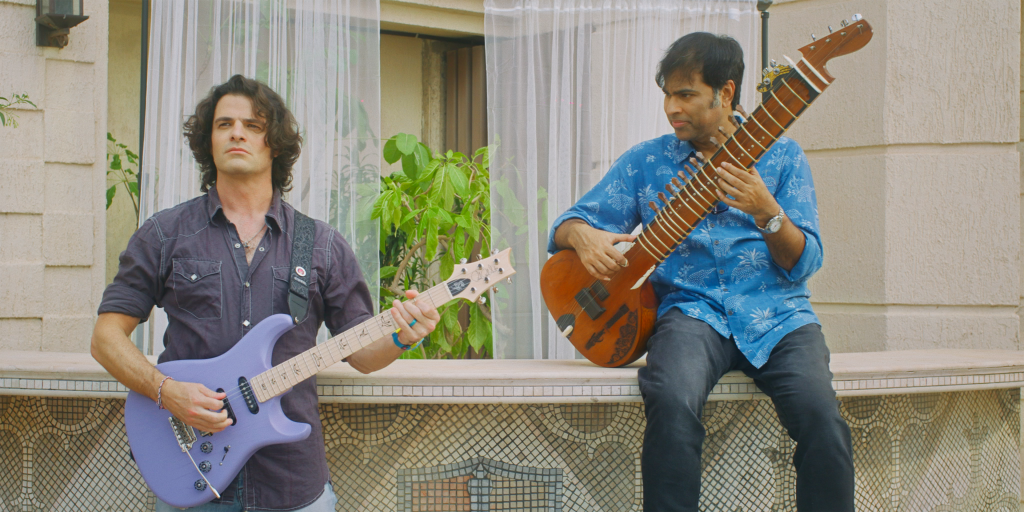
We had met through the Snarky Puppy extended universe. He sat in with us at a show in Mumbai back in 2023, and I was floored by his abilities on the sitar. We ended up chatting a while in the green room, and then a few months later, he contacted me about working on the album that would become Feathered Creatures. My participation started just as a session musician, but eventually developed into a co-writing situation.
What’s your favourite track from it?
I like ‘em all, but Hibiscus sticks with me the most.
What’s your favourite memory of recording the album?
There was always an exciting feeling opening an email from Purbayan or Nakul, that contained more developments on a track for which I had submitted parts. Kind of like opening a Christmas present!
What were the main challenges you faced?
Personally, just being able to find my rhythmic footing during some of the odd-meter grooves the songs have!
You are Grammy award wining guitarist from Fort Worth how did it all begin for you?
I’m originally from Menlo Park, CA actually, so that’s where my formative music learning took place. I had a series of really great teachers that I took lessons with, who taught me music theory and all sorts of my favorite rock songs. Later on, I studied more jazz, soul, funk, and gospel with various mentors and other musicians once I moved to Fort Worth, TX for college. I started my professional career after graduation, and began developing my craft and my network in the Dallas-Fort Worth Metroplex area.
What did you listen to starting out?
I was a rock n’ roll guy – hard rock, classic rock, metal, blues too, of course. Bands like Guns n’ Roses and Metallica. Ha!
Was there a particular track that made you want to play the guitar?
Hmm. I can’t recall a particular track that made me want to start, but hearing the instrumental “Summer Song” by Joe Satriani made me realize that there was a way to use the guitar to communicate a melody instead of vocals. That kind of set me off on my journey as an instrumentalist, I’d say.
Who are your top three guitarists?
Oh probably Prince, Edward Van Halen, and Jeff Beck.
If you could put together a band for a one off jam session who would be in the band?
I assume we can include those no longer with us? Maybe Jeff Porcaro, Herbie Hancock, and Louis Johnson.
What are you listening to at the moment?
I’ve been checking out some Boz Scaggs lately.
What’s next for you?
I’ve got a pretty busy summer touring with my quartet the Mark Lettieri Group, and my other bands Snarky Puppy and the Fearless Flyers. And then Purbayan and I will play a Feathered Creatures show in Calcutta, India in August!
What did you learn from Purbayan?
I love that he has so much purpose and confidence in his playing. On top of being an excellent writer, his improvisations really command your attention, and he’s great at pacing his solos.
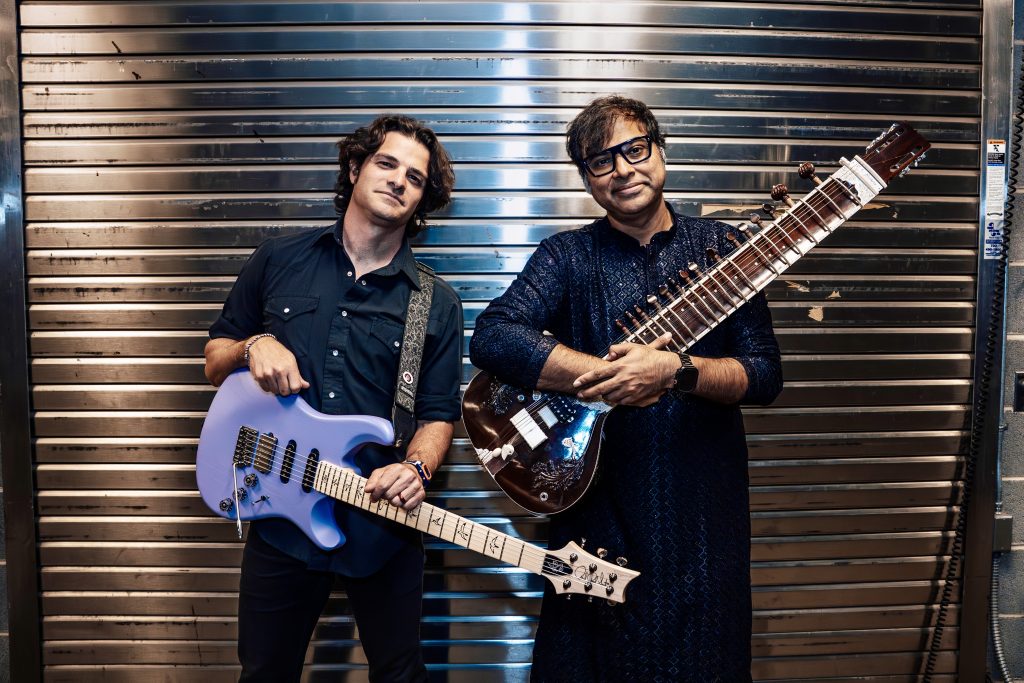
Hello Purbayan, how are you?
I’m doing very well, thank you. It’s been an exciting and intense period because Feathered
Creatures has finally taken flight after living in our imaginations for several years. Between touring,
teaching, recording, and balancing my life as a traditional Indian classical musician and a global
collaborator, there’s never a dull moment. Right now, I’m particularly energized because this album
represents so many strands of my musical life coming together—my Maihar lineage, my love for
improvisation, my curiosity about sound, and my friendships across musical cultures. When a
project begins as a conversation between friends and ends up becoming a full-fledged album on
GroundUP Music, you feel both grateful and slightly amazed.
Congratulations on the release of Feathered Creatures. How does it feel?
Thank you. Releasing Feathered Creatures feels a little like watching a child leave home for the first
time. The music lived with Mark and me through countless voice notes, late-night conversations
across time zones, revisions, experiments, and moments of doubt. As Indian classical musicians,
we are used to creating music that exists in the moment and disappears with the performance.
Recording an album is different—it freezes a particular phase of your artistic journey. What makes
this release especially meaningful is that it never felt like a fusion project trying to prove a point. It
felt like two musicians sharing stories in their native languages and discovering that they somehow
understood each other perfectly.
It’s a collaboration with Mark Lettieri. What was your favorite part about collaborating with
him?
Without question, the ease of communication. Mark and I come from very different musical
traditions, but we share a similar instinct for melody, groove, and musical storytelling. I first met him
backstage during Snarky Puppy’s India tour after I sat in with the band through my friendship with
Michael League, who had played on my album Unbounded. Within minutes, it felt like we had
known each other for years. My favourite thing about working with Mark is that there is absolutely
no ego in the room. He can play something breathtakingly complex and then immediately ask,
“What do you think?” That openness creates an environment where ideas can breathe. The
friendship came first; the album was simply a natural consequence of it.
What’s your favourite track from the album?
At the moment, I would probably say 9000 Miles. The title reflects the approximate distance
between Mumbai and Fort Worth, Texas, where Mark is based, but it also symbolizes the emotional
distance that music effortlessly collapses. The track begins with a distinctly Indian melodic identity
and gradually evolves into something that neither of us could have created alone. By the end it
inhabits a jazz-funk universe while somehow retaining its raga-inspired soul. For me, it perfectly
captures the spirit of the album: rooted, adventurous, and completely unafraid of crossing borders.
What’s your favourite memory of recording the album?
One of my favourite memories wasn’t actually a recording session—it was when we began seeing
the songs take on visual identities. The videos, particularly for tracks like Shallow Water, Blackout,
involved an extraordinary team creating futuristic worlds through CGI, anime-inspired imagery, and
generative AI. Mark and I were filming in different parts of the world on green screens, yet somehow
we ended up inhabiting the same dreamlike landscape filled with mythical animals and impossible
scenery. It reminded me that music today is no longer just sound—it’s a complete artistic
ecosystem where visuals, technology, and storytelling all contribute to the experience.
What were the main challenges you faced?
The biggest challenge was restraint. Most people assume that combining Indian classical music
with modern harmony is difficult—and it is—but the real challenge is deciding what not to play.Indian classical music is melodically sophisticated; contemporary jazz harmony can be intellectually
dense. The art lies in making choices that serve the music rather than showcasing knowledge. I
often think back to lessons I learned from masters like Béla Fleck, Michael League, and Antonio
Sánchez. Complexity is only valuable if it deepens the emotional experience. Learning where to
leave space became one of the most important lessons of this entire project.
How did you get your start in music?
Music was not a hobby in my household—it was the atmosphere we breathed. I was born into a
family deeply connected to Indian classical music and began learning sitar from my father, Pandit
Partha Pratim Chatterjee, at a very young age. The training was rigorous and rooted in the
guru-shishya tradition. There were no shortcuts. Long hours of practice, repetition, discipline, and
listening were simply part of daily life. At the time I probably viewed it as work. Looking back, I
realize those years gave me an incredibly strong foundation that later allowed me to explore other
musical worlds with confidence.
What did you listen to starting out?
As a child, I was surrounded primarily by Indian classical music. Recordings of great masters filled
our home, and I spent countless hours listening to sitar, sarod, khayal, and instrumental music. As I
grew older, curiosity took over. I began listening to jazz, progressive rock, world music, film scores,
and eventually artists such as Pat Metheny, Chick Corea, Béla Fleck, Snarky Puppy, and many
others. What fascinated me was discovering that great music, regardless of genre, often seeks the
same thing: honesty, beauty, and connection.
Was there a particular artist that inspired you to pick up the sitar?
The first inspiration was undoubtedly my father because he was the musician I saw every day. But
as I grew older, I became deeply influenced by the great architects of the instrument—Pandit Ravi
Shankar, Ustad Vilayat Khan, and Pandit Nikhil Banerjee. Each represented a different philosophy
of expression. Ravi Shankar expanded the sitar’s global reach, Vilayat Khan brought extraordinary
vocal nuance to the instrument, and Nikhil Banerjee embodied profound introspection. Their
recordings continue to reveal new lessons every time I revisit them.
Who are your top three musicians you look to for inspiration?
That’s an impossible question because the list changes constantly, but if I had to choose three
today, I would say Béla Fleck, Michael League, and Zakir Hussain. Béla showed me how deeply
rooted music can remain while still fearlessly evolving. Michael has an extraordinary ability to build
musical communities and create spaces where different traditions thrive together. Zakir bhai
remains one of the greatest examples of artistic generosity I have ever encountered. He
demonstrated that mastery and humility can coexist beautifully.
What are you listening to at the moment?
My playlists are wonderfully confused! On any given day you might find me listening to a dhrupad
recording from several decades ago, followed by Snarky Puppy, followed by an orchestral film
score, followed by electronic ambient music. Recently I’ve been revisiting a lot of progressive and
cinematic music because I’m fascinated by how atmosphere is created through sound design. At
the same time, I still return regularly to the recordings of the great Indian masters because they
remain an endless source of inspiration and perspective.
What’s next for you?
The next chapter is very exciting. We’ll be taking Feathered Creatures to audiences around the
world through live performances while continuing to develop new visual content around the album.
Beyond that, I’m increasingly interested in creating larger artistic experiences that bring together
Indian classical music, technology, immersive visuals, and global collaborations. Teaching and
mentoring through PAAMF also remain close to my heart. Ultimately, my goal has always been
simple: to help Indian classical music reach new audiences without losing the depth and integrity
that make it so special.
What did you learn from Mark?Perhaps the most valuable thing I learned from Mark is the power of curiosity without judgment. He
approaches music with extraordinary technical mastery, yet he never arrives with preconceived
notions about what something should sound like. Watching him work reminded me that innovation
often comes from listening more than speaking. He also reinforced my belief that friendship is one
of the most underrated creative forces in music. When trust exists between musicians,
experimentation becomes fearless. In many ways, Feathered Creatures is as much a story about
friendship as it is about music.